In these, the first few hours of the Year of the Dragon, we continue on from our last look back over the course of yaogun, part II of one man’s view of the best records to come out of China’s rock scene takes us into the new millennium. Chronologically we go…
Cold-Blooded Animal by Cold-Blooded Animal, 2000
 Less inspired by Kurt Cobain than his embodiment, Xie Tianxiao, the band’s singer/guitarist who now goes by the name XTX, was a force of nature live, and though he still retains some of that energy, in the early aughts he was at his peak. Here, “Who Was it That Brought Me Here”, live at CD Cafe in Beijing in 2003.
Second-Hand Rose by Second-Hand Rose, 2003

Yeah, singer Liang Long dresses like a girl. But when you listen to the album, it doesn’t matter, and that’s the true test. “Gathering Flowers” showcases the bridge bewixt traditional China and modern rock.
Ma Music featuring Glamourous Pharmacy, Ruins and Wooden Pushmelon, 2001
 This posse of bands led the early-aught alt scene, often infusing art into their performances, which signaled a commitment to more than just music. Xiao He, who walks both sides of the fine line separating idiot from genius in his current solo work, led GP; Ruins singer Zhou Yunshan first added his name to the band’s and now just goes by his name; WPM’s Song Yuzhe makes great folk music. Listen to the whole record via this link, which may be in Chinese but is easy enough to navigate.
“How Steel Wasn’t Tempered” – Wooden Pushmelon by jWc
The World is a Noise Garden by Sound Fragment, 2002

Spacey and dreamy, the record showcases the empty spots even more than the titular noise. One of yaogun’s rare headphone records. Here, the lead track, “Deceive One’s Self” (ziqi).
Xin by Wang Lei, 2004
 Wang’s first decade-plus in the arts saw him move from breakdancing to pop-rock to freak-folk. In the new millennium, he took to industrial music briefly, then discovered dub and fell in love. This record is the peak of that fascination, mixing traditional and contemporary sounds from a range of different traditions to create a minimal, groovy and bounce-along-able record.
“Again” – Wang Lei by jWc
P.K. 14 White Paper, 2005
P ost-punk quartet P.K. 14’s third album sees the band in top form, just in time for the mid-decade “indie” boom. The video for “Them,” below, is one of several greats the band produced.
Omnipotent Youth Society by Omnipotent Youth Society, 2010
 Singer Dong Yaqian may not look like he’s having a good time while performing “The Not-So-Omnipotent Comedy,” below, but the song, as evidenced by the singalong, is fun in a way that is rare (even if you wouldn’t know it by watching frontman Dong Yaqian); ditto, the album.
Sorrow, 2006
This Readily Assimilative People, 2010
by Lonely China Day


Two records made for headphones, and two records more representative of Twenty-First century China than any other yaogun album.
“One” from Sorrow
“Rise Up” from This Readily Assimilative People
L & R by Wang Wen, 2010
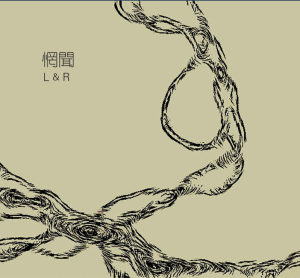 This Dalian-based post-rock group has a sizable following cross-country, and is helping fertilize the local scene by example and involvement through record label (Fox Tail) and venues (several short-lived spots).
Cang Lang Xing by Zhaoze, 2011.
Like their brilliant fellow (now former) Guangzhou  resident Wang Lei, they seemed to have suffered somewhat from being outside of Beijing, not receiving anything remotely like the appreciation they ought to. But, like the two post-rockers mentioned above, they have a seriously intense fanbase. Below, “Cang Lang Shui Yu You” live in Hong Kong, May 2011.

 Dark Dream by Dou Wei, 1993. A year after leaving the very Bon Jovi-y Black Panther and cutting his hair, Dou Wei let loose a record that was a bit further out there than anything for which yaogun was prepared at that point. Taking on new wave and goth, the rebranded Dou Wei headed further toward the fringes as the years went on. “Higher Being”
 e at a time when China Fire was no longer the only game in town. The first compilation, released four years previous, introduced the nation to yaogun, but it was yaogun of a limited range: The metal and hair-rock to which the first generations took. The second volume expanded the range. “All the Same” by Underbaby represents the Cobain influence that began to spread in the mid-nineties.
 channeling and championing the growing alt-ification happening in yaogun at the time. What made the album stand out was the metal of Zhou’s early years mixed with a heavy dose of Seattle sound and a little dab of funk. But because record label Magic Stone was in the last years of its mainland operations, it didn’t give the record the push that its earlier releases received. “Fg” is the lead-off track:
 Boredom Brigade (aka Wuliao Contingent), 1999. Only Reflector and Brain Failure remain these days, but the quartet of bands here (69 and Anarchy Jerks were the other two, the former much more interesting than the latter) were atop the punk pyramid of the late-nineties. More on the album


 “I Want Beer”, by Joyside, from 2004’s Drunk is Beautiful. A count-off – and, one is quick to add, band – of a very different kind. As quickly as it takes to get from the “one” to the first millisecond of the word “three,” singer Bian Yuan’s digestive system takes revenge and his opening call sinks like a blimp with a fast leak: “ONE! TWO! sr—(gulp-belch)” is what comes out, and you feel the discomfort of what sounds like it might be day-old beer, but we’d know better than to expect there was any alcohol that old in the vicinity of this band. Joyside does for booze what a band like Anarchy Jerks did (and