Recently, Red Rock got a thumbs-up from self-proclaimed “music geek” Alan Cross, who is well known as the host of The Ongoing History of New Music from, among other spots, back when Toronto’s 102.1 FM was called CFNY; he now hosts a show called The Secret History of Rock which can be found on his website.
In a happy new year move from an element of the Chinese music community, a track to celebrate the upcoming Year of the Dragon in a style dear to those of us, in the West, with fond memories of Band Aid and its international brethren and sisterians as well as those familiar with China’s own take on the phenom in that group’s wake.
Seems that over thirty folks got together in a studio to record “Rock 2012,” calling the song the Third Annual Yaogun Spring-Festival Theme Song Recording (though the word ‘yaogun’ might be better, here, translated at ‘Rock and Roll’ particularly based on the song lyrics, see below). The last time folks came together under such a banner was for a concert at Beijing’s Olympic Stadium last January featuring an even wider group of groups. This year, in addition to the concert, a song.
Sure, they’re not going to feed the world – heck, they probably won’t be able to feed Sun Jie, the most enormous one in on the recording (who is oft found manhandling a keytar in his aptly-named group Big Man 大块头 whose members are each no less than 220 lbs, though this video questions their hiring practices, assuming bassists, too, must meet the requirements) – but it is a gathering in the service of happy- and rock-ifying our new year.
As a person who was careful about assigning different meanings to “rock” and “yaogun” – in short: the former comes from the West, the latter comes from China, though not all rocky music made in China qualifies – it’s interesting to note that the singers here only refer to the English word for rock and roll. My quick translation of the chorus:
“2012
We’re singing rock and roll
Whether that day will come
2012
We still want Rock N ‘Roll
Just for that little feeling of freedom”
I struggle with yaogun, and with China, and with China’s attitude and behavior toward yaogun, and this video is a good example. On the one hand, there’s a lot not-quite-rock about it. The folks involved, like the kiddie-band, and the sprinkling of popstar-types. The tune itself sounds like one of those “rock” songs a room full of executives might’ve written by committee and focus groups: ‘Ooooo! Don’t forget the traditional-music breakdown section,’ one says. ‘Right, that’ll test well with the older folks. And also we should totally bring down the music like halfway through and dramatically, slowly, bring it back in after a bit of that soft-singing,’ adds another. ‘Oh, and don’t forget that thing where you make the song suddenly go up higher, like a step,’ someone else chimes in. ‘That’s where you’ll get shivers!’
If the poppy participants and elements were cringe-worthy, the yaogunners among the ranks were nearly shocking: Lei Jun, of Oi!-punks Misandao, who is not the only bald one in the video, but is the only self-described skinhead, for one: There is footage from this flick of the band’s somewhat regular trips to load up on cough syrup to fuel the night’s shenanigans. I see Gao Hu of Miserable Faith, Xiao Nan, the venerable co-founder of Cobra, who was one of the stars of the nineties’ yaogun scene. And a few others.
But in yaogun’s, erm, long, strange march to something less than a hated and sometimes feared thing that needs to be stamped out – or worse: ignored – it’s stuff like this that helps it along. Pop is not necessarily the enemy, especially as a means to an end. Yeah, the poppers make it look bad, and the music here isn’t what you’d call epic, but pop is the quickest, best, and, really, only way to the ears of the masses. We just hope that the masses take to rock. And that these folks go from “singing rock and roll” to living and creating yaogun.
The end of the year beginning of the year means the inevitable looking back at the year that was. But this past year, we reach end of an era, Yaogunnily-speaking. Taking Cui Jian’s performance of “Nothing to My Name” on national television in 1986 as our birthdate for yaogun, Chinese rock & roll turned twenty-five in 2011.
In celebration, I’m looking back through the best yaogun records not just of 2011, but the best yaogun records thus far. We begin with yaogun’s early years, heading chronologically through the nineties.
But first, a quick digression, allowing a moment to ruminate on the difference between Important albums and Good albums – in our minds, in silence – and know that only sometimes are records both. For my list, I have but one guiding principle, and it resides squarely in the territory of the Good: Would I put this record on and listen to it?
I’ve skipped the eighties, by the way, because Cui Jian’s debut album, Rock and Roll on the New Long March, which kicked everything off in the first place, is automatically on just about any yaogun list there is – think Rare, Important and Good.
Dark Dream by Dou Wei, 1993. A year after leaving the very Bon Jovi-y Black Panther and cutting his hair, Dou Wei let loose a record that was a bit further out there than anything for which yaogun was prepared at that point. Taking on new wave and goth, the rebranded Dou Wei headed further toward the fringes as the years went on. “Higher Being”
Balls Under the Red Flag by Cui Jian, 1994. Cui’s third yaogun record expanded the influences further afield, incorporating electronic and hip hop sounds, rhythms and samples. Below, “Flying”.
Various artists, China Fire Vol. II, 1996. The second of what would be three compilations came at a time when China Fire was no longer the only game in town. The first compilation, released four years previous, introduced the nation to yaogun, but it was yaogun of a limited range: The metal and hair-rock to which the first generations took. The second volume expanded the range. “All the Same” by Underbaby represents the Cobain influence that began to spread in the mid-nineties.
Squeeze by Zhou Ren, 1996. Zhou’s underrated album was influential across the spectrum, channeling and championing the growing alt-ification happening in yaogun at the time. What made the album stand out was the metal of Zhou’s early years mixed with a heavy dose of Seattle sound and a little dab of funk. But because record label Magic Stone was in the last years of its mainland operations, it didn’t give the record the push that its earlier releases received. “Fg” is the lead-off track:
Fg by Zhou Ren by jWc
Yaogun Beijing III (1997) is a great example of the compilation — and band, and genre — boom of the mid/late nineties. There is the classic hair-rock of the early yaogun days, but there is also grunge, alt, dark metal and more signalling the rise of alt. All-stars on the album include the man now known as XTX in an early guise and Zi Yue, who combines traditional opera, comedy and prog-rock in a mixture that’s still successful today. Hades is still going strong today; “The Nightmare Continues” was, it should go without saying, the only track of its kind here:
Boredom Brigade (aka Wuliao Contingent), 1999. Only Reflector and Brain Failure remain these days, but the quartet of bands here (69 and Anarchy Jerks were the other two, the former much more interesting than the latter) were atop the punk pyramid of the late-nineties. More on the album at this previous post. Here, Reflector brings the posse’s theme song:
Incantation by Wild Children, 1999. Their haunting acoustic folk may seem out of place among the fin-de-siecle harder-edged sounds coming out of yaogun’s first expansion, but the Wild Children packed all of the emotional punch of the punks, without cranking the volume.
This time of year, folks make lists. One list to which Chinese-rock-watchers will be paying special attention is the list drawn up by Midi Productions, hander-outer of the Midi Music Awards. This year marks the third time bricks will be bestowed upon the “top” artists across several categories of yaogun.
Midi, you’ll perhaps recall, began as a music school in 1993, drawing those about to rock from the four corners of the Middle Kingdom. In 2000, the school hosted what was less a festival than a showcase for the bands formed by students. Four years later, it outgrew its campus quad moving into a huge park; by the Olympic year, ‘festival’ and ‘Midi’ were synonyms and the festival expanded to other cities.
I’ll pause here to say that in addition to having played at and worked on several years’ worth of Midi Festivals as well as having worked with Midi on getting several artists on their stages, I have, since 2009, been one of the awards’ hundred-plus judges.
The Midi Awards are like the Festival itself: On the surface, all is fantastic. But a look deeper reveals a state of affairs not so much sad as it is disheartening; sad and disheartening in the way that awards generally are, but also in other ways. First, the standard awards narrative: One bemoans the exclusion of the ones one deems worthy of inclusion, damming the spectacle as a result. Until, that is, one’s personal favourites are included, in which case there’s the short-term celebration, sometimes skipped over completely, in the face of the bittersweet experience of the effects of that attention: That morning-after feeling that defines the way many watch their favourite movies, bands, authors cross over in the mainstream. Of course, there’s no risk of pop-co-optation resulting from the Midi Awards, but it’s a feeling with which, I think, anyone who’s felt like they’ve discovered something is familiar.
There is, though, a disheartening element of the awards that goes beyond the standard awards-are-bunk experience. If Midi is yaogun’s judge, Midi needs to be up to snuff, or else yaogun suffers from their mistakes. The short-lists tend to look like the line-ups of just about every Midi Festival since day one: AK47, who won the first Metal award, appeared at all but one of the Midi Festivals; ditto for Miserable Faith, who swept four of the eleven categories at the Awards’ first instalment. Categories are messy as well: XTX and Miserable Faith were nominated, in 2009, for both Rock and Hard Rock band of the year; in 2010, Miserable Faith was nominated in Rock and Hard Rock; 2011 sees Ordnance and Yaksa nominated in Hard Rock and Metal categories. And though I’m jazzed that Omnipotent Youth Society is back on the list again this year, how does a song qualify for Best Song two years’ running?
I was convinced by the argument of influential critic, and one of the eight members of the awards’ Standing Committee that oversees the awards, Hao Fang, that these awards were something Midi ought to do. Movies, he said, weren’t taken seriously until the industry started the Oscars. “Eventually,” he says, “they got respect as a form. After you’ve respected your own form enough, others will too.” But then, the Midi Awards have given many reasons for others to hold off on that respect, the most blatant of which was bestowing upon themselves, in 2010, the award for biggest contribution to Chinese rock. Have they contributed greatly to yaogun? Most definitely. Is handing themselves an award for their work the way to get the rest of the world to notice, care or, well, not point and laugh?
This year, judges were sent upwards of thirty albums, and given thirteen category options. That new categories over the years have opened up – folk, album art – are treated as news that the awards are getting more inclusive. I’d argue they’re like the rush to add stages at the festival: Just because you have them doesn’t mean they represent a collection of artists that should be celebrated. Am I saying that there are no worthy folk acts or album art? No, I am not. But the rush to expansion is made at the expense of examining what one has.
It hasn’t all been bad news: I was personally glad to see Perdel, the Gar and Wang Wei get noinatd in 2009. 2010’s acknowledgement of Omnipotent Youth Society also brought joy. This year, Zhaoze, a mesmorizing post-rock band, and Long Shen Dao (LSD), a reggae/dub collective, are highlights; they stand far above the pack of upwards of thirty albums judges were sent (I found very few worthy of even a full listen). But my picks didn’t make the cut. Judges don’t vote on the short-list, their votes help create it. A Standing Committee of eight makes the final decision, announced at a concert on December 10.
I haven’t given up hope that the Midi Awards will live up to yaogun’s potential, but I also recognize that, like the festival, it’s going to be a long time until that happens. Fortunately, nobody’s making music just to please the Midi judges, so I think that yaogun will do just fine – even if the Midi Awards don’t notice.
Here are my picks:
(First: A note on the translation, which was done by Midi. “performance” doesn’t refer to a particular show; it refers, rather, to a band or musician. So Best Metal Performance is actually Best Metal Band)
In the punk section of Red Rock: The Long, Strange March of Chinese Rock & Roll, I look at a few tunes that exemplify one of the rockinest tools in the kit, the count-off. The one-two-three-four has been employed in the service of great music from the get-go. A good one sets the stage, a Great one does that and more. Yaogun’s count-offs are no exception, so here’s a countdown of count-downs. One of the slowly but surely growing number of mixtapes at jWc.com features the following mix, but herewith, an extended look at the tunes.
One, two, three, four!
“Rock and Roll on the New Long March” by Cui Jian, from 1989’s album of the same name. The first song on yaogun’s first record, the second major stop on yaogun’s Long March (the first being the one that Cui took three years prior when he introduced rock and roll to the masses with “Nothing to My Name”). The March is laid out musically after a brief, not-quite-marchy intro: With the snare drum guiding the way, Cui counts off not just the lyrical introduction, but his nation’s introduction to the long march ahead of it. Chorus-wise, a second count-off, and one that goes to what seems like the odd choice of seven. But it’s a number that works in the context not only of this song (“one-two-three-four fiiiiiiive, six, seven”), but in the echoes of drilling squads and exercising citizens across China, whose knee-bends and toe-touches happen to the count of seven, which rhythmically, in Chinese, makes not only great sense, but great rhythm. It’s one of those songs that creates a complete picture: He’s not just singing about a march; he’s singing a march. This live version is from 1992:
“Down”, Subs, from 2006’s Down. Wherein Kang Mao takes the verbal abuse of her father and turns it into a creedo for rock and roll survival. “My father,” she says when introducing the song live, “told me that I have ‘three No’s’.” Choosing rock, she was told, meant no money, no family, no job, no future. Instead of seeing that as a problem, Subs celebrates it, and the rock and roll life in general. When she asks the crowd to join in, the choice is celebrated as communal and adds another layer to the whole thing.
“Down”, live in Shanghai in 2009:
“I Want Beer”, by Joyside, from 2004’s Drunk is Beautiful. A count-off – and, one is quick to add, band – of a very different kind. As quickly as it takes to get from the “one” to the first millisecond of the word “three,” singer Bian Yuan’s digestive system takes revenge and his opening call sinks like a blimp with a fast leak: “ONE! TWO! sr—(gulp-belch)” is what comes out, and you feel the discomfort of what sounds like it might be day-old beer, but we’d know better than to expect there was any alcohol that old in the vicinity of this band. Joyside does for booze what a band like Anarchy Jerks did (and Misandaodoes) for Oi!, namely, abuse the hell out of it.
“Bastards of the Nation”, by Demerit, from 2008’s Bastards of the Nation. A mood-setting count-off if there ever was one. Singer Li Yang lets forth a growl from the depths not only of his soul but of places one oughtn’t ever reach. Like Bian Yuan, Li forgoes a number, but unlike Bian, it’s on purpose – and with purpose: ‘Four’ becomes a ‘fuck you’ whose ‘you’ is a long drawn-out scream that lets us know that whoever ‘you’ is is either lying, heart beating its last, blood pouring forth, dead on the floor in front of Li, or will be in the very near future. Demerit is the kind of band that means business in a way that inspires not just fear, but respect.


 Dark Dream by Dou Wei, 1993. A year after leaving the very Bon Jovi-y Black Panther and cutting his hair, Dou Wei let loose a record that was a bit further out there than anything for which yaogun was prepared at that point. Taking on new wave and goth, the rebranded Dou Wei headed further toward the fringes as the years went on. “Higher Being”
 e at a time when China Fire was no longer the only game in town. The first compilation, released four years previous, introduced the nation to yaogun, but it was yaogun of a limited range: The metal and hair-rock to which the first generations took. The second volume expanded the range. “All the Same” by Underbaby represents the Cobain influence that began to spread in the mid-nineties.
 channeling and championing the growing alt-ification happening in yaogun at the time. What made the album stand out was the metal of Zhou’s early years mixed with a heavy dose of Seattle sound and a little dab of funk. But because record label Magic Stone was in the last years of its mainland operations, it didn’t give the record the push that its earlier releases received. “Fg” is the lead-off track: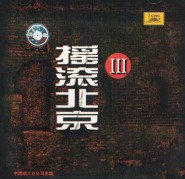
 Boredom Brigade (aka Wuliao Contingent), 1999. Only Reflector and Brain Failure remain these days, but the quartet of bands here (69 and Anarchy Jerks were the other two, the former much more interesting than the latter) were atop the punk pyramid of the late-nineties. More on the album
 Midi, you’ll perhaps recall, began as a music school in 1993, drawing those about to rock from the four corners of the Middle Kingdom. In 2000, the school hosted what was less a festival than a showcase for the bands formed by students. Four years later, it outgrew its campus quad moving into a huge park; by the Olympic year, ‘festival’ and ‘Midi’ were synonyms and the festival expanded to other cities.
 he standard awards narrative: One bemoans the exclusion of the ones one deems worthy of inclusion, damming the spectacle as a result. Until, that is, one’s personal favourites are included, in which case there’s the short-term celebration, sometimes skipped over completely, in the face of the bittersweet experience of the effects of that attention: That morning-after feeling that defines the way many watch their favourite movies, bands, authors cross over in the mainstream. Of course, there’s no risk of pop-co-optation resulting from the Midi Awards, but it’s a feeling with which, I think, anyone who’s felt like they’ve discovered something is familiar.
 This year, judges were sent upwards of thirty albums, and given thirteen category options. That new categories over the years have opened up – folk, album art – are treated as news that the awards are getting more inclusive. I’d argue they’re like the rush to add stages at the festival: Just because you have them doesn’t mean they represent a collection of artists that should be celebrated. Am I saying that there are no worthy folk acts or album art? No, I am not. But the rush to expansion is made at the expense of examining what one has.


 “I Want Beer”, by Joyside, from 2004’s Drunk is Beautiful. A count-off – and, one is quick to add, band – of a very different kind. As quickly as it takes to get from the “one” to the first millisecond of the word “three,” singer Bian Yuan’s digestive system takes revenge and his opening call sinks like a blimp with a fast leak: “ONE! TWO! sr—(gulp-belch)” is what comes out, and you feel the discomfort of what sounds like it might be day-old beer, but we’d know better than to expect there was any alcohol that old in the vicinity of this band. Joyside does for booze what a band like Anarchy Jerks did (and